
What Is Customer Journey Automation (And Why It Matters in 2026)
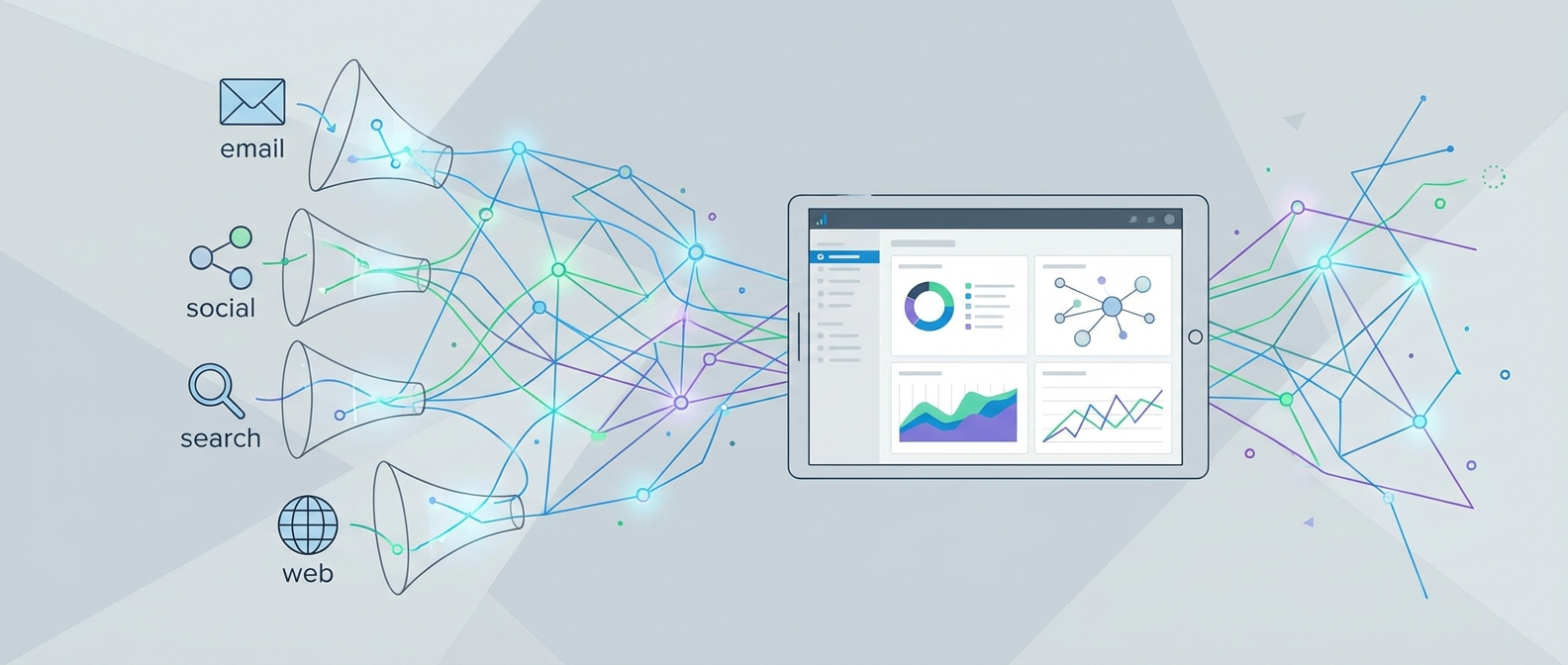
Customer journey automation is the practice of using software to deliver the right message to the right person at the right time — automatically, based on how that person actually behaves. Not who you assume they are, but what they do: clicking a link, abandoning a cart, visiting a pricing page, opening an email, or walking into a store.
The difference between automation done well and automation done poorly is enormous. Generic batch-and-blast campaigns are not just ineffective — they're actively damaging. McKinsey data shows that 71% of consumers now expect businesses to deliver personalized interactions. When they don't get them, they notice, and they churn.
This guide covers how customer journey automation works across every stage of the funnel, what triggers and workflows you need to build, how AI is reshaping the entire discipline in 2026, and which platforms actually deliver on the promise.
The Five Stages of the Customer Journey — And What to Automate at Each
Awareness
At the awareness stage, a prospect has just discovered your brand. They might have clicked an ad, found a blog post, or landed on your homepage for the first time. Automation here means capturing that signal immediately and beginning to build a behavioral profile.
Key automations at this stage include lead capture forms that trigger a welcome sequence, behavior-based tagging when visitors browse specific product categories, and retargeting sequences for visitors who bounce without converting. The goal isn't to sell. It's to move someone from "I've heard of you" to "I'm interested."
Consideration
This is where most journeys stall. A prospect is evaluating options — reading reviews, comparing features, maybe attending a webinar. Automated lead nurturing sequences that respond to specific actions (reading a case study, downloading a guide, visiting a pricing page) can push prospects through this stage faster than any sales rep following up on a spreadsheet. The critical mistake is sending the same nurture sequence to everyone. Behavioral triggers exist precisely to prevent this.
Decision
At the decision stage, friction is the enemy. The right automated touchpoints — a timely abandoned cart email, a personalized demo offer, a comparison guide sent at the right moment — can make the difference between a closed deal and a lost one. Companies using AI-driven automation for sales at this stage have seen up to a 30% reduction in sales cycle length and a 25% increase in conversions, according to monday.com's analysis of AI sales automation outcomes.
Retention
Acquiring a customer is only the beginning. Post-purchase automation — order confirmations, shipping notifications, onboarding sequences, product education emails, check-in messages — builds the relationship that determines whether someone buys again. This is the stage most teams under-invest in, which is exactly why it's where automation delivers the highest ROI relative to effort.
Advocacy
Happy customers who feel genuinely recognized become advocates. Automated referral programs, anniversary emails, loyalty rewards, and review request sequences can systematically turn satisfied buyers into brand promoters. This stage doesn't happen by accident — it has to be designed into the journey from the start.
Traditional Journey Mapping vs. AI-Powered Automation: A Direct Comparison
The contrast between how customer journeys were managed five years ago and how leading teams manage them today is stark. Traditional journey maps were static diagrams that collected dust between quarterly reviews. AI-powered automation creates living systems that adapt in real time — more like a GPS that reroutes when traffic hits than a paper map you printed before leaving home.
| Dimension | Traditional Approach | AI-Powered Automation |
|---|---|---|
| Journey map updates | Static documents, updated quarterly or annually | Living system updated in real time based on actual behavior |
| Personalization basis | Demographics (age, gender, location) | Behavioral signals (clicks, searches, abandonment, in-store visits) |
| Sales cycle impact | No measurable automation impact | Up to 30% reduction in sales cycle length |
| Conversion impact | No measurable automation impact | Up to 25% increase in conversions |
| Team time recovered | Manual data entry and follow-up | 10–15 hours saved per week by automating routine sales tasks |
| Consumer expectation alignment | One-size-fits-all campaigns | 71% of consumers expect personalized interactions — AI delivers them at scale |
Newsletter
Get the latest SaaS reviews in your inbox
By subscribing, you agree to receive email updates. Unsubscribe any time. Privacy policy.
These aren't marginal improvements. A 30% shorter sales cycle and 10–15 hours of recovered team time per week represent meaningful competitive advantages. The teams still relying on static segmentation by demographics are competing with one hand tied behind their backs.
The Automation Workflows You Actually Need to Build
Welcome Series
A welcome email is the highest-engagement touchpoint you'll ever have with a subscriber — open rates at this stage dwarf anything you'll achieve later. Personalized welcome emails that greet new subscribers by name and acknowledge how they found you (organic search, paid ad, referral) consistently outperform generic sequences. Build this first, before anything else.
Abandoned Cart Recovery
Abandoned cart reminders are one of the most proven automations in e-commerce. A three-email sequence — immediate reminder, 24-hour follow-up, final urgency message — outperforms a single send in almost every split test. Klaviyo and Drip are purpose-built for this kind of behavioral e-commerce automation, with pre-built cart abandonment flows you can launch without engineering support. Both pull real-time cart data and product images directly into the email, which matters for conversion.
Lead Nurture Sequences
B2B teams need nurture sequences that respond to intent signals rather than time delays. A prospect who downloads a pricing guide should enter a different branch than one who reads a thought leadership post. ActiveCampaign and HubSpot Marketing Hub both offer conditional branching that makes this logic manageable without a developer, which is why they dominate in the mid-market B2B space.
Post-Purchase Onboarding
The period immediately after purchase is when churn risk is highest and when relationship investment pays off most. Order confirmations, shipping notifications, product education sequences, and 30-day check-in emails should all be automated. This is table stakes in 2026 — if you're still sending these manually or not sending them at all, you're leaving retention on the table.
Re-Engagement Campaigns
Inactive subscribers cost you in deliverability and skew your analytics. Automated win-back sequences triggered by 60, 90, or 120 days of inactivity let you either re-engage dormant contacts or remove them before they damage your sender reputation. Frequency control automation — adapting email volume to individual engagement levels — reduces unsubscribes by matching cadence to subscriber preferences rather than your publishing schedule.
Send-Time Optimization and Frequency Control
Two underrated dimensions of customer journey automation are when you send and how often you send. Most teams focus on what they're sending and neglect both.
Send-time optimization uses behavioral analytics to deliver emails when individual subscribers are most active — not when your marketing team happens to hit "schedule." This is no longer a premium feature. It's widely available and has a measurable impact on open rates and click-through rates. AI-driven email automation tools can now segment consumers not just by who they are, but by when they're most likely to engage, based on patterns in their actual behavior.
Frequency control is equally important and more often neglected. Automation makes it easy to over-send. Smart frequency capping — adapted to engagement levels — reduces unsubscribes and protects list health. If someone opens every email, you can increase cadence. If they haven't engaged in three weeks, pull back. Automation should handle this logic automatically, not through quarterly manual list hygiene.
Which Platforms Handle Customer Journey Automation Best
Not every platform delivers customer journey automation at the same depth. Choosing based on your business model matters more than choosing based on feature count.
For e-commerce behavioral automation: Klaviyo and Drip lead the field. Both are built around real-time behavioral triggers and ship with pre-built flows for abandoned cart, browse abandonment, post-purchase, and win-back sequences. Klaviyo's deep data integration with Shopify makes it particularly strong for stores that need granular product-level personalization.
For B2B lead nurturing and CRM integration: HubSpot Marketing Hub, ActiveCampaign, and Marketo Engage are the serious contenders. Marketo is the enterprise choice — complex, powerful, and priced for organizations with dedicated marketing operations resources. HubSpot and ActiveCampaign serve the mid-market well with less implementation overhead and faster time to value.
For budget-conscious teams: Brevo and GetResponse offer journey automation at price points accessible to smaller teams. Neither matches the behavioral depth of Klaviyo or the CRM integration of HubSpot, but both deliver functional multi-step automations without enterprise contracts or implementation consulting fees.
For product-led growth and mobile-first teams: Customer.io stands out for teams that need to trigger messages across email, SMS, and push notifications based on product events rather than just email engagement. If your automation strategy lives inside your product as much as in your marketing funnel, Customer.io is built for that architecture.
What 2026 Changes About Customer Journey Automation
Three shifts are fundamentally reshaping how customer journey automation works this year, and they're worth understanding before you build or rebuild your automation stack.
AI moves from assistant to co-pilot. If 2025 was the year marketers experimented with AI, 2026 is the year they become expert in it — that's Klaviyo's framing, and it's accurate. AI is no longer just surfacing insights for humans to act on. It's increasingly orchestrating entire campaign sequences autonomously, adjusting timing, content, and channel mix based on real-time behavioral signals. Autonomous marketing orchestration is evolving quickly, and platforms that haven't built AI into their core automation engine are already falling behind.
Privacy and consent reshape personalization strategy. Stricter privacy regulations are forcing a fundamental rethink of how behavioral data gets collected and used. First-party data — information customers willingly share through interactions with your brand — becomes the essential foundation. Automation platforms that help you collect, organize, and activate first-party data will have a structural advantage over those that relied on third-party signals that are increasingly unavailable.
Relevance beats hyper-personalization. This is the nuance that separates sophisticated journey automation from gimmickry. Inserting a subscriber's first name and city into every email is now table stakes — it doesn't impress anyone. What actually drives engagement is relevance: messages that arrive at the right moment in a person's decision journey, about something they demonstrably care about. The shift is from "we know who you are" to "we understand where you are right now." AI-driven segmentation based on actions and inactions — not just demographics — is what makes that distinction possible at scale.
The businesses that win at customer journey automation in 2026 won't necessarily be those with the most sophisticated technology stacks. They'll be the ones that use automation to be genuinely helpful to their customers at every stage — earning trust through relevance and timing, not just engineering conversion events.